

Sandwich enclosure
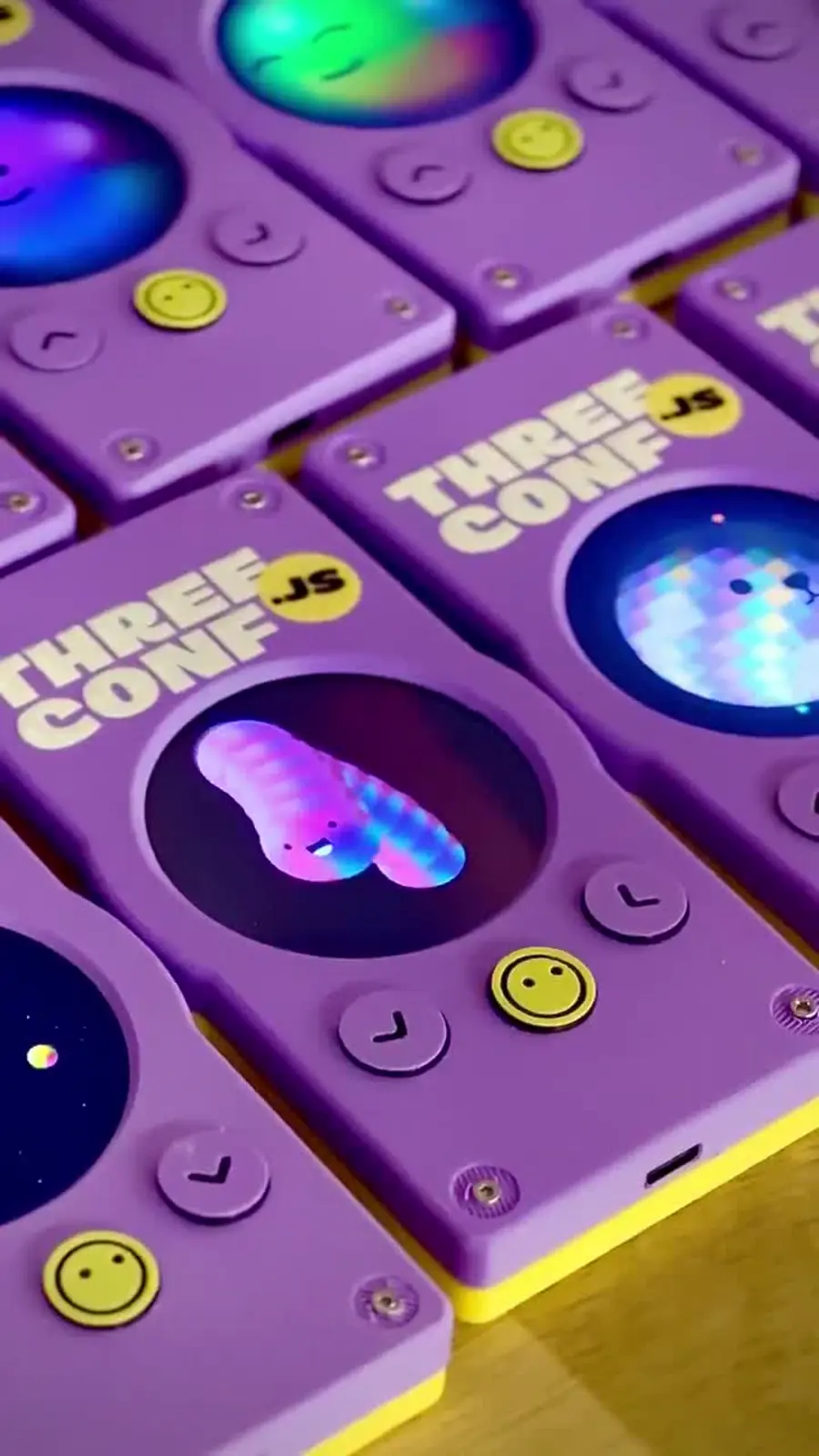
Two-part shell with a matte purple face and bright yellow base, fastened by corner hex screws — easy to open for bring-up.
Conference badges
Electronic badges turn a conference into a mesh of tiny computers. Study the open catalog, tear down the Three.js Conf speaker design for inspiration, then version your own board from schematic to shell.
Featured build
Custom purple-and-yellow handheld speaker badges with a circular color display, three front buttons, USB-C, and matching lanyards. Speaker “buddies” greet nearby peers over ESP-NOW. Hardware and firmware are not open-sourced — use the visuals as design reference, then build from the open projects below.
Two-part shell with a matte purple face and bright yellow base, fastened by corner hex screws — easy to open for bring-up.
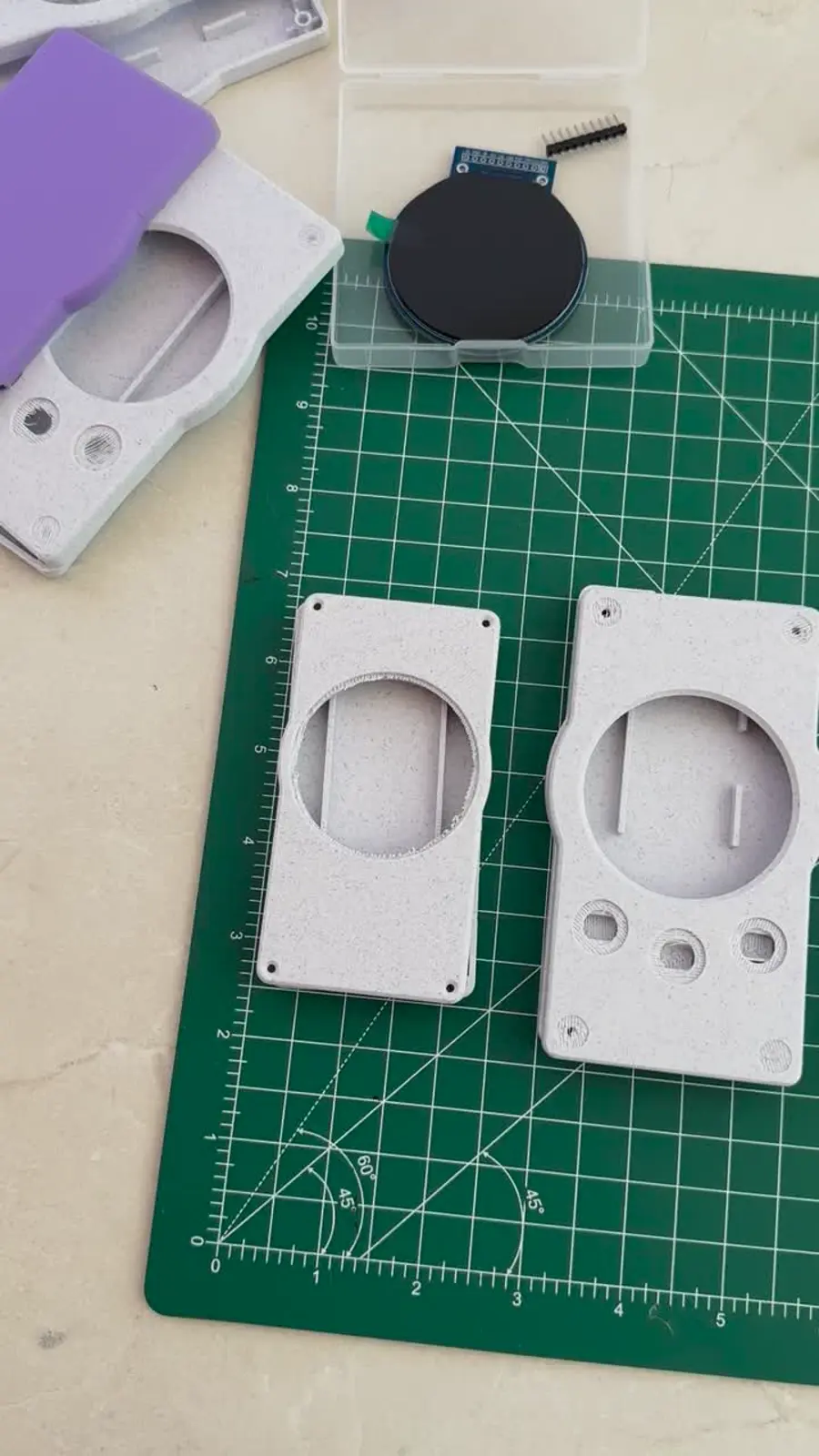
Recessed round LCD/OLED drives per-badge 3D-style characters. Enclosure prototypes show a circular module on a small carrier PCB with header pins.
Left/right navigation plus a larger yellow smiley action button under the screen.
USB-C on the bottom edge for charge and flash; thickness leaves room for a LiPo pack.
Each speaker buddy greets others in the same room over ESP-NOW — a lightweight ESP32 peer protocol without a full Wi-Fi AP.
Romain spent roughly a month iterating the electronic enclosure; early prints used speckled FDM faceplates before production purple/yellow shells.
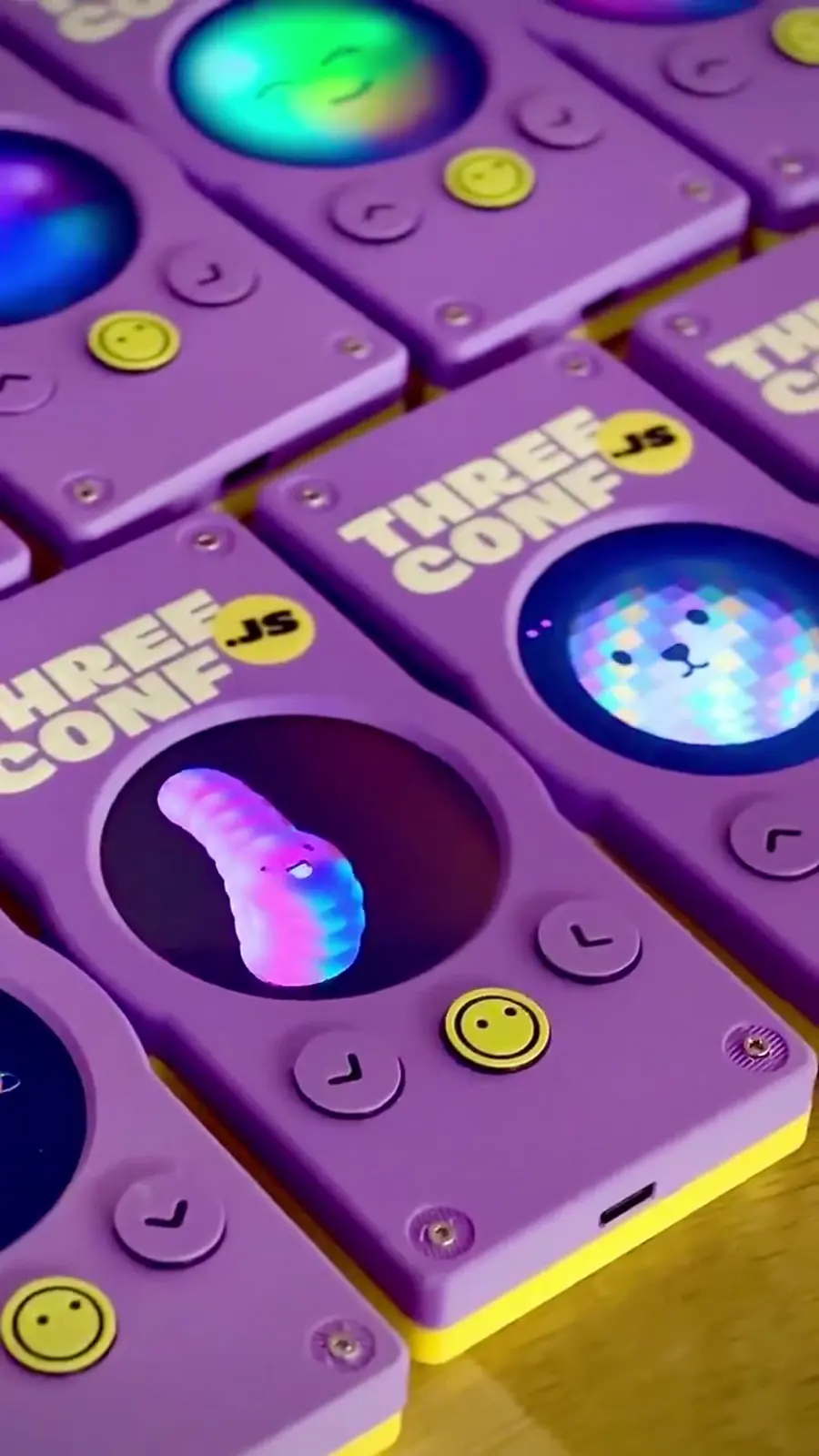
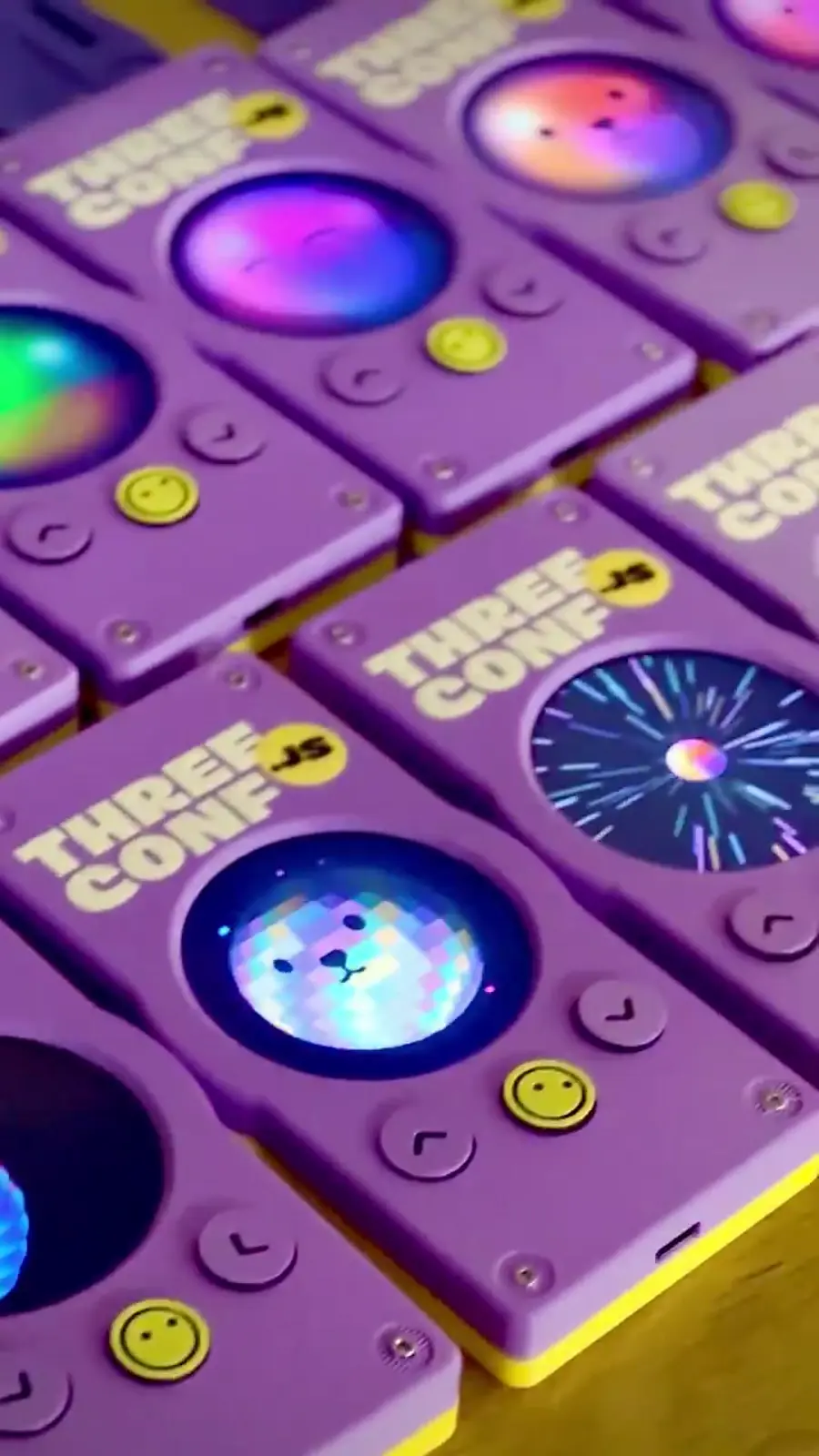
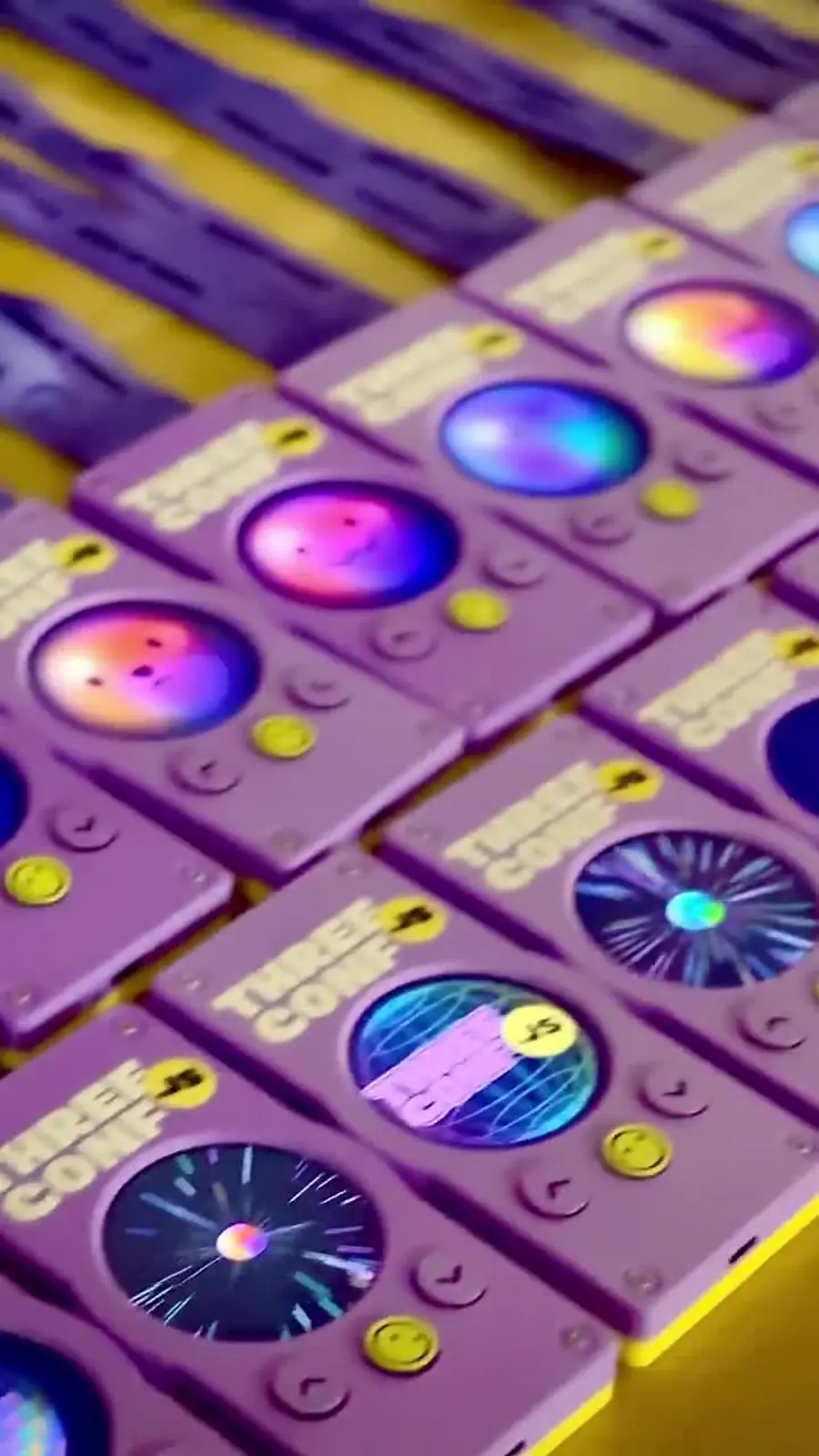
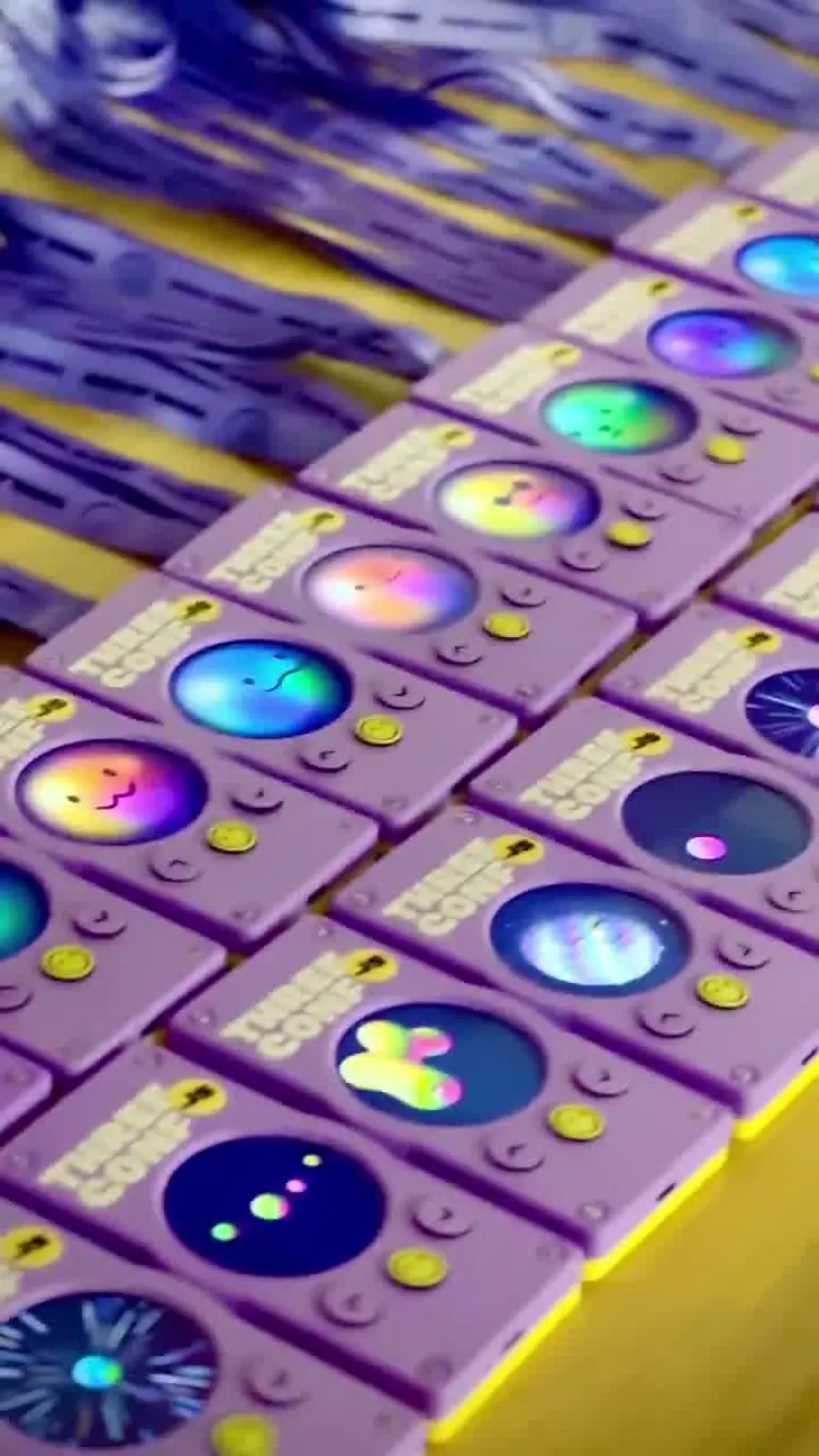
Media credits: Romain Briaux / Hervé Studio. See ATTRIBUTION.md.
Open source
Curated boards with published PCB and/or firmware. Full tables also live in the wiki markdown catalog.
ESP32-C6 crypto-challenge badge with OLED, NeoPixels, BLE coop mode, and KiCad hardware by Electronic Cats.
RF communicator badge with MIT-licensed hardware and firmware for mesh-style conference play.
ESP32-C3 wearable with NFC, RGB LEDs, sensors, captive-portal CTF, and detailed hardware docs.
Full open hardware + software stack for the EMF Tildagon: KiCad, docs, add-ons, and a web emulator.
ESP32-S3 wearable with KiCad hardware, WS2812B matrix, SAO header, USB-C, and PlatformIO firmware.
ESP32-C3 badge with KiCad, Gerbers, wireless rock-paper-scissors, and UART CTF challenges over SAO.
Small OSHW KiCad + Arduino badge from OLIMEX — a compact starter for conference giveaways.
Analog-forward vectorscope badge with MIT-licensed design and community enclosure work.
ESP32 launcher firmware for the May Contain Hackers 2022 badge, continuing the badge.team stack.
Shared ESP32 firmware platform that ran across multiple European camp and hotel badges.
FPGA SoC badge with open PCB artwork, softcore, and workshop materials.
Through-hole friendly ESP32 badge with TFT, buttons, and MIT firmware sketches for soldering workshops.
Retrocomputing-themed open badge with published hardware and firmware from Hackaday.
Foundational ESP32 e-paper badge with Eagle PCB, MicroPython apps, and the badge.team firmware lineage.
Unofficial KiCad badge with schematics, gerbers, and MacroFab-ready fabrication package.
DIY
You do not need a conference production line. A solid first badge is a two-layer PCB, a 3D-printed shell, and one memorable interaction.
Fork an ESP32-C3/S3 or RP2040 badge from the catalog (EF28, BSides SD, Vectorscope, or EMF Tildagon). Keep their power tree and USB recovery path; replace the silkscreen and outline.
Name + QR, LED mesh, SAO add-on port, NFC unlock, or ESP-NOW greetings like the Three.js buddies. Ship one delightfully, not five halfway.
Budget USB-C → charger → LiPo → 3V3, a programming header, and mechanical keep-outs for the display and buttons. Export Gerbers and a BOM you can actually order.
Print sandwich shells with screw bosses (the Three.js prototypes show exactly this). Dial clearance around the round display before any colored production run.
Flash a factory test that lights every LED, scans buttons, draws a splash on the panel, and reports battery voltage over serial. Only then layer the social firmware.
Keep schematic, PCB, firmware, and STL/STEP in one git repo with an SPDX license. When it is ready, publish a public fabPlane project so others can remix it.
Product updates. No spam.